
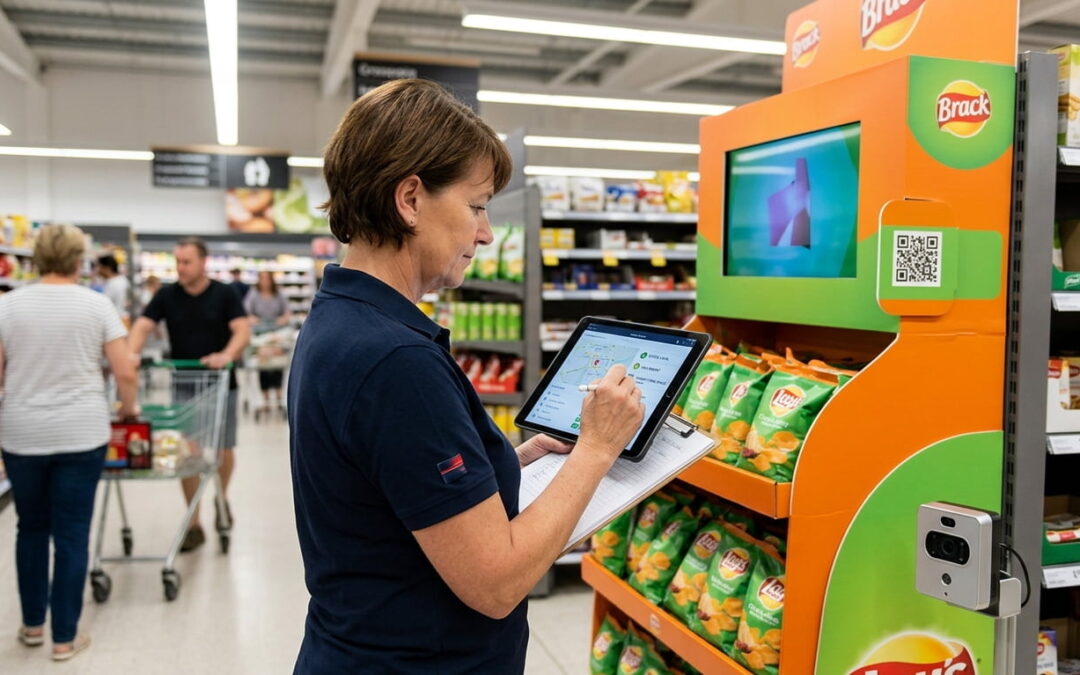
Launching a point-of-sale campaign without measuring its results is like sailing without a compass. Brands that invest in POS materials, activations and trade marketing initiatives need to know precisely what works and what does not. Measuring impact is not just about counting sales: it is about understanding shopper behaviour within the retail space and translating it into strategic decisions that make every euro invested work harder.
In this complete guide you will discover how to measure the real impact of your POS materials using professional indicators, specialist tools and qualitative analysis that reveals what the numbers do not tell you.
The fundamental KPIs for measuring an in-store campaign
The first step in evaluating any in-store initiative is to define the key performance indicators (KPIs) before the campaign begins. Without clear benchmarks, any data loses its meaning. The most relevant point-of-sale indicators include:
- Sell-out: units sold to the end consumer (the most important indicator of success)
- Sell-in: units placed in store (reflects acceptance by the distributor)
- Share of shelf: space occupied compared with competitors
- Average basket value: the average value of each purchase during the campaign
- Conversion rate by zone: percentage of visitors who buy in the display area
Comparing sales during the campaign with a “baseline period” (an equivalent earlier period) makes it possible to calculate the real uplift attributable to the initiative. This comparison should be made store by store to detect variations by location, store size or shopper profile.
Professional tools for auditing the point of sale
One of the most underrated elements in campaign measurement is the point-of-sale manager (GPV). This professional visits the stores, checks that the material is correctly installed and gathers data on stock, product presence and campaign execution. Without them, much of the field information never reaches the marketing team. Mobile point-of-sale audit apps allow the GPV to photograph the installation, log incidents and send reports in real time.
Scanner data from distributors or from the supermarket chains themselves is another fundamental source. Accessing it whenever possible gives an accurate picture of product turnover at each point of sale during the campaign period.
For campaigns with an integrated digital component, such as QR codes on POS materials or interactive screens, web or app analytics data complements the campaign dashboard with digital engagement metrics from within the store itself. This approach, connected with integrated digital strategies, multiplies your analytical capability.
Qualitative analysis: what the numbers do not tell you
Quantitative data is essential, but it does not explain everything. Direct observation of shoppers (how they interact with the display, whether they read the message, whether they pick up the product) provides insights that no sales report reveals. Short point-of-sale surveys carried out by promoters capture consumers’ perceptions of the material, the product and the campaign.
Key questions to ask:
- Did you notice the display when you came into the store?
- Did you understand the message in the first few seconds?
- Did it make you want to try or buy the product?
Consumer panels and post-campaign focus groups are more in-depth qualitative tools that help you understand the reasons behind the behaviour observed in store.
The critical role of design and installation in results
Poorly placed POS material, or a design that fails to catch the eye, distorts any measurement. The importance of design at the point of sale is decisive: a well-designed display not only draws the eye but guides the shopper towards making a purchase. If the material does not fulfil its communication role, the sales data will not reflect the campaign’s true potential.
That is why measurement should include a visual audit of the installation:
- Is the material in the agreed location?
- Is it clearly visible from the entry point to the shelf?
- Is the message legible from the usual shopping distance?
360 strategy: integration with other channels
Measuring the impact of an in-store campaign makes even more sense when it is part of a 360 marketing strategy. Point-of-sale data, combined with metrics from social media, paid media campaigns or influencer activity, provides a complete view of the shopper journey from the first advertising touchpoint to the final purchase.
This holistic view makes it possible to identify which channel contributes most to conversion and to optimise investment in future campaigns using evidence-based criteria.
Measuring well today is the best investment in getting it right tomorrow. If your brand wants to optimise its point-of-sale activity with a professional, results-driven approach, the Grupo WDi team can help you design, deliver and measure campaigns that genuinely reach consumers at the decisive moment.
Frequently asked questions about measuring point-of-sale campaigns
What are the most important KPIs for measuring a point-of-sale campaign?
The most widely used are sell-out, sell-in, sales uplift versus the baseline period, share of shelf and footfall in the activation area. Average basket value, conversion rate by zone and the number of interactions with the POS materials are also used.
How can you measure the impact of a display or POS material?
By combining sales data from the stores where the material is installed and comparing it with similar stores without the initiative. Footfall counters, camera analytics and reports from the point-of-sale manager provide complementary information on real shopper interaction.
Is it necessary to measure before, during and after the campaign?
Yes. Pre-campaign data establishes the baseline. Data gathered during the campaign allows real-time adjustments. And post-campaign analysis is essential for calculating the real ROI and drawing lessons for future initiatives.
What role does the point-of-sale manager play in measuring results?
The GPV is the main agent for collecting data in the field. They check that the material has been installed correctly, detect stock-outs, photograph the real situation in store and report incidents. Their information is key to interpreting sales data in context.
Can the impact of a campaign be measured in real time?
Yes, with the right tools. Mobile audit apps, scanner data shared by distributors and in-store digital analytics systems provide an up-to-date view of campaign performance while it is running.