
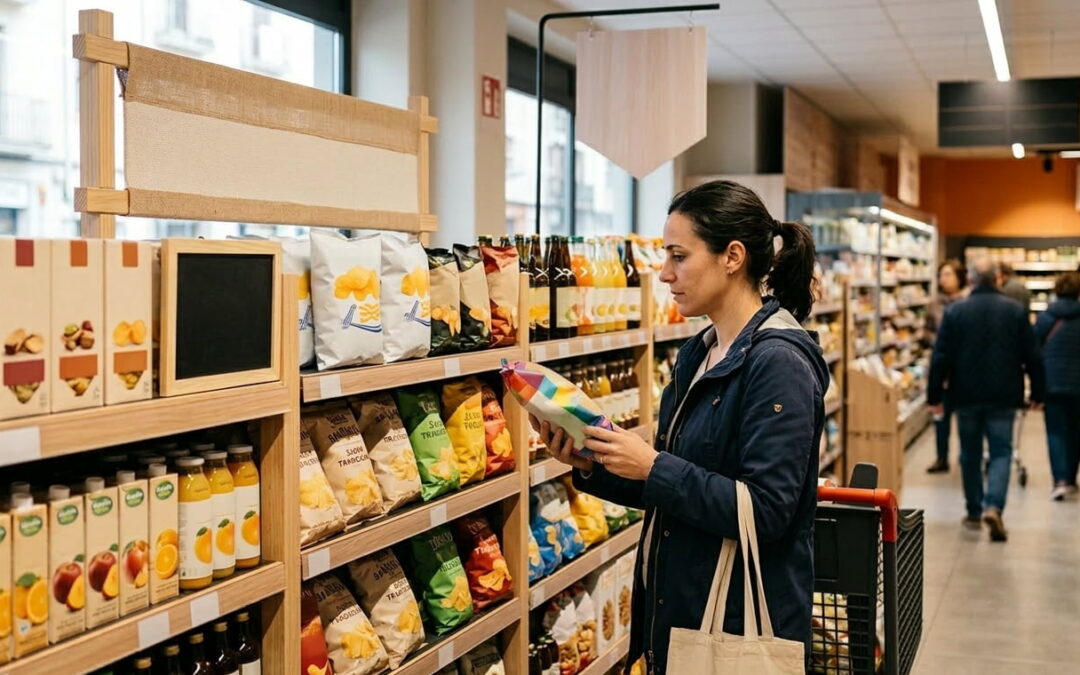
When a customer walks into a store, many purchase decisions have not yet been made. In fact, a large share of final choices happen right in front of the shelf. That is the moment when shopper marketing makes the difference.
In our work developing strategies for brands, we see every day how small changes at the point of sale can transform the consumer experience. Product placement, visual materials or a well-designed activation can turn a simple visit into a purchase.
That is why, when we work on retail marketing projects, we analyse the retail space from the shopper’s point of view. We design strategies that help brands connect with customers at the key moment of decision. This approach is part of what we deliver through our marketing services for brands and retailers, where we combine creativity and strategy.
Shopper marketing:
Shopper marketing is about understanding how consumers think when they are inside the store. It is not just about displaying products, but about creating an environment that makes buying easier.
When we analyse a retail space, we observe how customers move. We identify which areas attract the most attention and where an impulse purchase is most likely to happen. This kind of analysis allows us to design specific activity at the point of sale.
Much of this work is carried out through retail marketing and point-of-sale communication strategies, where we combine materials design, activations and strategic planning to improve the shopper experience.
When the environment is well designed, customers perceive the store as more attractive and become more inclined to buy.
Factors that influence purchase decisions at the point of sale
Inside a store there are many stimuli that influence the shopper’s decision. Some are visual, others emotional, and they all work together to guide the final choice.
One of the most important elements is product visibility. When an item is well positioned on the shelf or in high-traffic areas, the likelihood of purchase increases.
Signage also plays a fundamental role. Displays, signs and POS materials help direct the consumer’s gaze towards particular products. In many of our projects we combine creativity and production to develop these elements as part of our materials and space production solutions for retail campaigns
In addition, the overall store environment influences how the brand is perceived. A tidy, attractive space that is consistent with the company’s identity builds consumer trust.
Shopper marketing strategies in retail
To influence purchase decisions, you need to create experiences at the point of sale. Placing products is not enough; you have to generate interaction with the consumer.
One of the most widely used techniques is visual merchandising. This discipline involves organising the retail space strategically to capture the shopper’s attention.
Lighting, fixture design and product layout help guide the customer’s journey. When the space is well thought out, consumers feel more comfortable exploring the store.
We also develop brand activations that allow direct interaction with the public. Tastings, demonstrations or product experiences generate positive emotions and increase the likelihood of purchase. These initiatives are part of our brand activation and event projects that connect with consumers.
When customers take part in an experience, their relationship with the brand becomes far more memorable.
The customer journey inside the store
The route a consumer takes through a store has a direct impact on sales. When the space is well designed, shoppers discover more products and stay in the store for longer.
In our projects we analyse how customers move around the retail space in order to optimise product placement. This makes it possible to identify high-traffic zones and less visible areas.
In the busiest zones we place strategic products or special promotions. In less visible areas we use visual devices or experiences that draw the consumer’s attention.
This approach is part of how we work in experiential marketing, combining creativity, strategy and consumer insight to improve results for brands.
Integrating digital marketing at the point of sale
Retail is evolving rapidly thanks to technology. Today, the customer experience is no longer limited to the physical store space.
Many consumers arrive at the store after researching online. That is why it is important to connect digital strategy with the point of sale.
In our projects we help brands integrate digital solutions that improve the shopper experience. Interactive screens, dynamic content and digital communication tools broaden the possibilities for interaction.
These solutions are part of our digital marketing strategies applied to brand experience, where we connect the online world with the physical in-store experience.
Conclusion
Shopper marketing is a key tool for influencing purchase decisions inside the store. Understanding how consumers behave at the point of sale makes it possible to design experiences that genuinely connect with them.
When we combine space design, visual materials, brand activations and technology, we create far more effective retail environments.
That is precisely what we aim for in our work with brands and retailers: helping to turn the point of sale into a strategic space where every element has a clear purpose.
If you would like to discover more ideas, trends and real projects in marketing and brand experiences, you can also visit our blog specialising in marketing and retail, where we share knowledge and inspiring cases from the sector.
Shopper marketing FAQs
What is shopper marketing?
Shopper marketing is a strategy focused on understanding consumer behaviour at the point of sale in order to influence purchase decisions.
Why is the point of sale important in retail?
Because it is the moment when the consumer makes the final decision. The store environment, product visibility and the experience directly influence the purchase.
How can you influence the customer’s purchase decision?
Through visual merchandising, brand activations, strategic signage and an attractive shopping experience.
What role does technology play in shopper marketing?
Technology makes it possible to integrate digital experiences at the point of sale and improve interaction between brand and consumer.