
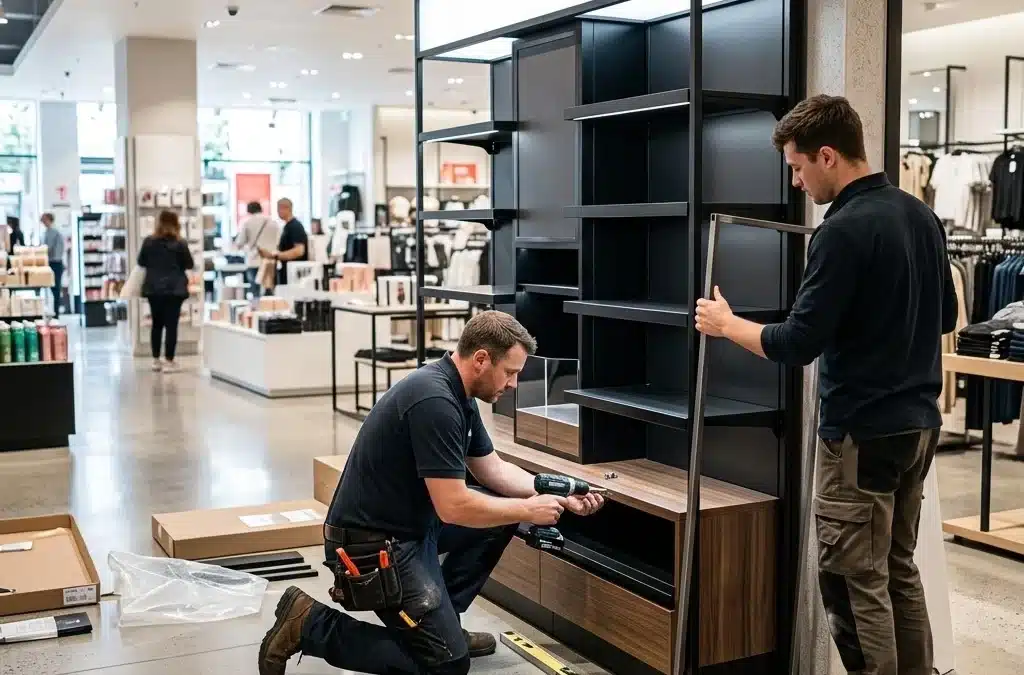
Turnkey point-of-sale installation is a service in which a single company handles the entire process, from designing and manufacturing the POS materials to transport, installation and in-store maintenance. Choosing a turnkey supplier allows brands to save time, avoid coordination errors between multiple suppliers and ensure the end result is consistent across every point of sale. Companies such as Grupo WDi offer precisely this kind of end-to-end service for retail chains that need to roll out installations across multiple locations at the same time.
Finding the right supplier is not always easy. The market ranges from workshops that handle one-off manufacturing to specialist agencies capable of managing projects nationally or internationally. Choosing badly can lead to delays, cost overruns and careless execution that directly damages the brand’s image in store.
Point-of-sale installation: what a turnkey service involves
A turnkey point-of-sale installation service usually covers several stages: designing the fixture or display, producing the materials, distribution logistics to the various stores, physical installation in the outlet and, in many cases, subsequent maintenance. This end-to-end structure drastically reduces the number of contacts needed to complete a project.
When a brand manages each stage with a different supplier, the risk of poor coordination increases: production times that do not fit the launch date, materials that do not arrive on time or installations poorly executed for lack of centralised supervision. A supplier specialising in POS materials production eliminates many of these risks by centralising the whole operation under a single management team.
Installation logistics and multi-store rollout
One of the biggest challenges of point-of-sale installation is logistics when the project involves dozens or hundreds of stores at the same time. Coordinating transport, local installation teams, delivery deadlines and quality control at each location requires a solid organisational structure.
An experienced turnkey supplier has proven processes for managing large-scale rollouts, including photographic checks of every installation, real-time reporting and geographically distributed technical teams. This is especially valuable for retail brands that need to launch a campaign or refresh their in-store image within a tight timeframe.
In addition, more and more brands require these installations to use sustainable materials, which you can review in detail in this sustainable POS guide, designed to help brands make more responsible decisions without sacrificing visual impact.
What to assess before choosing a turnkey installation supplier
Before signing with a supplier, it is worth analysing several key aspects that will determine the success of the project:
- Previous experience in projects of a similar scale.
- In-house production capacity versus full subcontracting.
- Real geographical coverage for in-store installation.
- Quality control and reporting processes during the rollout.
- Commitment to sustainable materials and current regulations.
Reviewing previous real-life cases is one of the most reliable ways to assess a supplier’s capabilities. You can browse specific examples of projects delivered across different sectors in our project portfolio, which reflects both the variety of formats and the scale of the rollouts carried out.
The importance of design before installation
A good point-of-sale installation starts long before the physical installation: it begins at the design stage. A poorly designed fixture or display, even if made with good materials, may turn out to be impractical, difficult to assemble or visually unappealing to the end customer.
That is why the most reliable turnkey suppliers have in-house design teams that work hand in hand with the brand’s marketing department, understanding both the commercial objectives and the technical constraints of the store space. This joint approach is what allows the end result to work both aesthetically and operationally.
This design stage is also linked to the overall retail marketing strategy, as the fixtures must fit coherently with the rest of the commercial actions the brand carries out in store.
Installations linked to events and one-off activations
Not all point-of-sale installations are permanent. Many brands need temporary structures for product launches, seasonal campaigns or short-term promotional activations. This type of project demands even more agility, as deadlines are usually tighter and the margin for error smaller.
Having a supplier capable of managing both permanent and temporary installations gives the brand flexibility, avoiding the need to turn to different suppliers depending on the type of project. Teams specialising in brand activations usually work closely with production teams to ensure these temporary installations meet the same quality standards as permanent ones.
Common mistakes when hiring an installation service
Many brands focus solely on price when choosing a point-of-sale installation supplier, without giving enough weight to real experience in projects of a similar scale. This often results in tight quotes that look attractive on paper but end up generating extra costs due to delays, reinstallations or low-quality materials that cannot withstand continuous use in store.
Another common mistake is failing to require a clear reporting system during the rollout. When a project involves dozens of stores, it is essential to have photographic evidence and real-time tracking of every installation. Without this control, it is very difficult to detect and correct errors in time, which can damage the brand’s image in several locations at once.
It is also common to underestimate the importance of the preliminary design stage. Accepting the first sketch without reviewing aspects such as ease of assembly, the weight of the materials or resistance to daily use can create problems that only come to light once the fixtures have already been manufactured, when correcting them is far more costly.
The advantages of centralising design, production and installation
When the same company manages the design, production and installation of a point-of-sale project, synergies arise that are difficult to replicate when working with different suppliers for each stage. The design team has first-hand knowledge of the technical constraints of production, and the installation team can provide valuable insight into which materials work best on the ground.
This centralisation also speeds up problem-solving. If something unexpected arises during installation, having a single point of contact able to make decisions on design, production and logistics means the situation can be resolved far more quickly than if several different companies had to be coordinated to find a solution.
Furthermore, working with a single supplier over the long term builds a relationship of trust in which the supplier gets to know the brand, its quality standards and its aesthetic preferences better and better, resulting in more efficient future projects that require less direct supervision from the client.
How to start a turnkey point-of-sale installation project
The first step in starting a project of this kind is to clearly define the scope: number of stores, type of fixtures required, deadlines and available budget. From there, it is advisable to request proposals from suppliers who can demonstrate real experience in similar projects, not just theoretical capability.
A good turnkey supplier does not just carry out what is asked of them; they bring their own judgement to improve the design, optimise production costs or propose more sustainable alternatives without compromising the end result. This consultative capability is what sets a mere manufacturer apart from a true strategic partner for retail.
If your brand needs to roll out a point-of-sale installation project in one or several stores, you can review our marketing services, read more content on the Grupo WDi blog or contact our team to discuss your project.
Frequently asked questions about turnkey point-of-sale installation
What does it mean for an installation service to be turnkey? It means that a single supplier manages the entire process, from design and manufacturing to logistics and final in-store installation, with no need to coordinate several different suppliers.
What advantages does it offer over managing each stage separately? It reduces the risk of poor coordination, saves internal management time and ensures greater consistency and quality in the end result across all stores.
Is a turnkey service more expensive than hiring by stages? Not necessarily. Although the initial cost may seem similar, hidden costs arising from delays, coordination errors and reinstallations are reduced.
Can sustainable materials be used in these installations? Yes, more and more suppliers offer recyclable or low-environmental-impact materials without compromising the durability or design of the fixtures.
How much time is needed to plan a multi-store installation? It depends on the number of stores and the complexity of the design, but it is generally recommended to start planning at least six to eight weeks ahead of the launch date.