
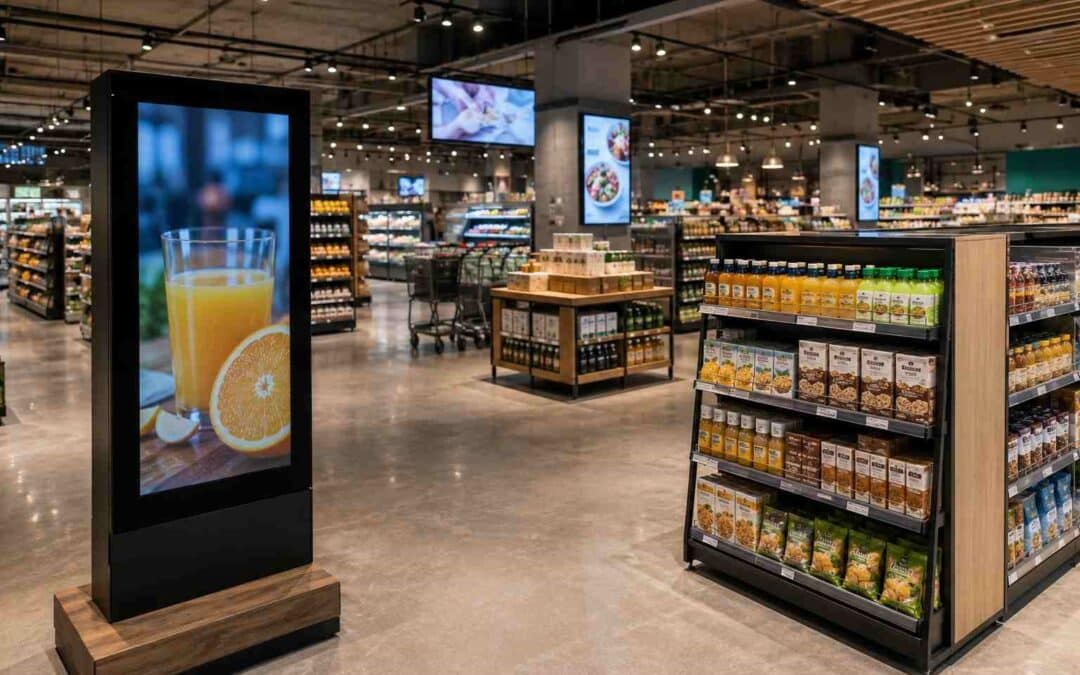
Retail media is advertising that brands buy directly from retailers, within their websites, apps and physical stores. It uses the retailer’s own data to show ads just before the moment of purchase, which improves targeting and makes it easier to measure the real return on each campaign. Chains such as Carrefour, with its Carrefour Links network, or platforms such as Amazon Ads are well-known examples of this model. At the physical point of sale, companies such as Grupo WDi help brands integrate screens, POS materials and advertising displays into a coherent retail media strategy.
Advertising budgets are changing course. More and more brands are investing where the real shopper is, not just where there is an audience. Retail media has gained ground because it connects advertising and sales in the same space. This guide explains what it is, how it works and why so many companies are betting on it.
What It Is and Why Brands Invest in It
Retail media turns retailers into media owners in their own right. They used to sell only space on their shelves or web pages. Now they also sell visibility, data and targeting capabilities to other brands.
This evolution responds to a clear need. Brands want to invest where they can measure real results. Retail media offers exactly that, because it links every advertising impression to a specific sale within the same ecosystem.
Networks: the new players in advertising
Retail media networks, or RMNs, are the platforms that manage this type of advertising. Large retail chains have created their own networks to monetise the traffic on their websites, apps and physical stores.
These networks offer different formats. They include ads in the internal search engine, banners on the website, digital screens in store and campaigns outside the retailer itself, known as off-site formats.
Each retail media network has its own audience volume and level of technological maturity. That’s why it’s worth analysing each option carefully before deciding where to invest the advertising budget.
How retail media works in physical stores and online
The process starts with shopper data. The retailer knows what each customer buys, how often and through which channel. That information makes it possible to show highly relevant ads at the right moment.
Online, the most common formats are sponsored products in search results and banners within the retailer’s website. In physical stores, the main media are digital screens, signage and displays carrying an advertising message.
Combining both channels is especially powerful. A brand can reinforce its online presence with physical visibility at the point of sale, creating a more complete shopping experience.
Designing these physical displays well requires retail space design expertise. The location of a screen or display has a direct influence on its advertising effectiveness.
On-site and off-site: the two levels of retail media
On-site retail media takes place within the retailer’s own channels. It includes the website, the app and the screens or displays inside the physical store. It is the most mature format and the easiest to measure.
Off-site retail media, on the other hand, takes the retailer’s audience beyond its own channels. The brand buys space on social media, connected TV or external portals, using the retailer’s data to target more effectively.
This second layer has grown strongly in recent years. It allows brands to extend their reach without losing the precision of the retailer’s real purchase data, something generic advertising cannot offer with the same level of detail.
Combining both levels effectively requires a holistic view of marketing. Relying on well-planned digital marketing strategies helps coordinate messages between the online environment and the physical point of sale.
First-party data: the competitive advantage of retail media
First-party data is the foundation of the whole model. It is information collected directly by the retailer, without relying on third-party cookies or external platforms.
This advantage has become critical in recent years. Restrictions on third-party cookies have forced brands to look for more reliable and sustainable data sources.
Thanks to this data, brands can measure results precisely. So-called closed-loop measurement makes it possible to know exactly which campaign generated which sale, something that is very difficult to achieve in traditional media.
Benefits for brands that invest in retail media
The first benefit is precision. Campaigns reach real shoppers, not just audiences interested in the subject. This reduces wasted advertising spend.
The second benefit is measurement. By knowing the sales generated by each campaign, brands can optimise their investment with hard data, not just estimates.
There is also a brand benefit. Appearing at the physical point of sale, with good visibility and careful design, reinforces the perception of quality in the eyes of the consumer.
Manufacturing durable physical displays that integrate well into the store requires expertise in retail furniture manufacturing. A good advertising display must be visible without interrupting the shopping experience.
Which sectors are betting on retail media
Food and FMCG lead investment in retail media. These are sectors with frequent purchases, where influencing the final decision has a direct and rapid impact on sales.
Beauty and DIY are also advancing strongly. Both combine online and in-store purchasing, which fits perfectly with the on-site and off-site retail media model.
Fashion and household appliances are gradually joining in. In these sectors, the physical point of sale remains key to the final decision, so in-store screens and displays gain weight every season.
Challenges and best practices when investing in retail media
The main challenge is treating retail media as advertising, not as a simple commercial negotiation with the retailer. It requires audience analysis, bid optimisation and continuous monitoring of results.
Another common mistake is spreading the budget across too many networks. It’s best to concentrate initial investment on one or two retail media networks, learn what works and then scale up judiciously.
Reviewing other brands’ retail media success stories helps avoid common mistakes. Analysing real results provides useful benchmarks before defining your own strategy.
Team training also makes a difference. A manager with digital media knowledge handles bidding and targeting better than a purely sales-oriented profile.
Future trends in retail media
Retail media will continue to grow in the coming years. More and more mid-sized retailers are launching their own networks, widening the options available to brands.
Artificial intelligence will play a bigger role in campaign management. It will help optimise bidding, personalise creatives and predict which format works best for each product.
The physical point of sale will also evolve. Dynamic screens and connected displays will make it possible to change messages in real time according to stock levels, time of day or shopper profile.
Conclusion
Retail media is no longer a trend; it has become a stable part of the advertising mix. It connects data, advertising and sales in the same space, both online and in physical stores. Brands that integrate it well achieve more profitable and measurable campaigns, with visible results from the very first weeks of activation.
If your brand wants to make the most of retail media at the physical point of sale, ask the Grupo WDi team for advice and discover how to design effective advertising displays for your store.
Frequently asked questions
What is retail media?
It is advertising that brands buy directly from retailers, using the retailers’ own data to reach shoppers before they make a purchase decision.
How does retail media differ from traditional advertising?
Retail media uses first-party data and measures results in real sales, whereas traditional advertising usually relies on audience estimates.
Which brands should invest in retail media?
Any brand with a presence in physical or online retail can benefit, especially in FMCG, food and frequently purchased goods.
What is a retail media network?
It is the platform that manages advertising within a retailer, including digital and physical formats and campaigns outside the retailer’s own channel.
How is the success of a retail media campaign measured?
Through closed-loop measurement, which links each advertising impression to the sales generated, providing precise data on return on investment.
What is the difference between on-site and off-site retail media?
On-site takes place within the retailer’s own channels, such as its website or store. Off-site takes that audience to other external media.
Is retail media profitable for small brands?
Yes, as long as you start with a controlled budget and clear objectives. Many networks allow campaigns to scale according to the size of the business.